01
Give loose material a bond.
Polymer-acrylic binder holds prepared soil and aggregate together, turning loose material into a more cohesive road surface.
Polymer-acrylic soil stabilizer
A stronger bond. Less loose dust. A dark, finished surface. Give suitable dirt and caliche roads a new direction with Crownwood’s tinted polymer treatment.
Ranch roads / Rural access / Low-speed yards
01 / The difference
Soil stabilization and a black finish, brought together. Permabase Black is a polymer-acrylic emulsion with carbon-black tint. As the water evaporates, the polymer binds the treated material.
Polymer-acrylic binder holds prepared soil and aggregate together, turning loose material into a more cohesive road surface.
Binding dust-generating particles helps reduce the dust that follows traffic on untreated dirt and caliche.
Carbon-black tint gives the treated surface a dark, asphalt-like appearance, with a water-resistant polymer bond.
The product at work
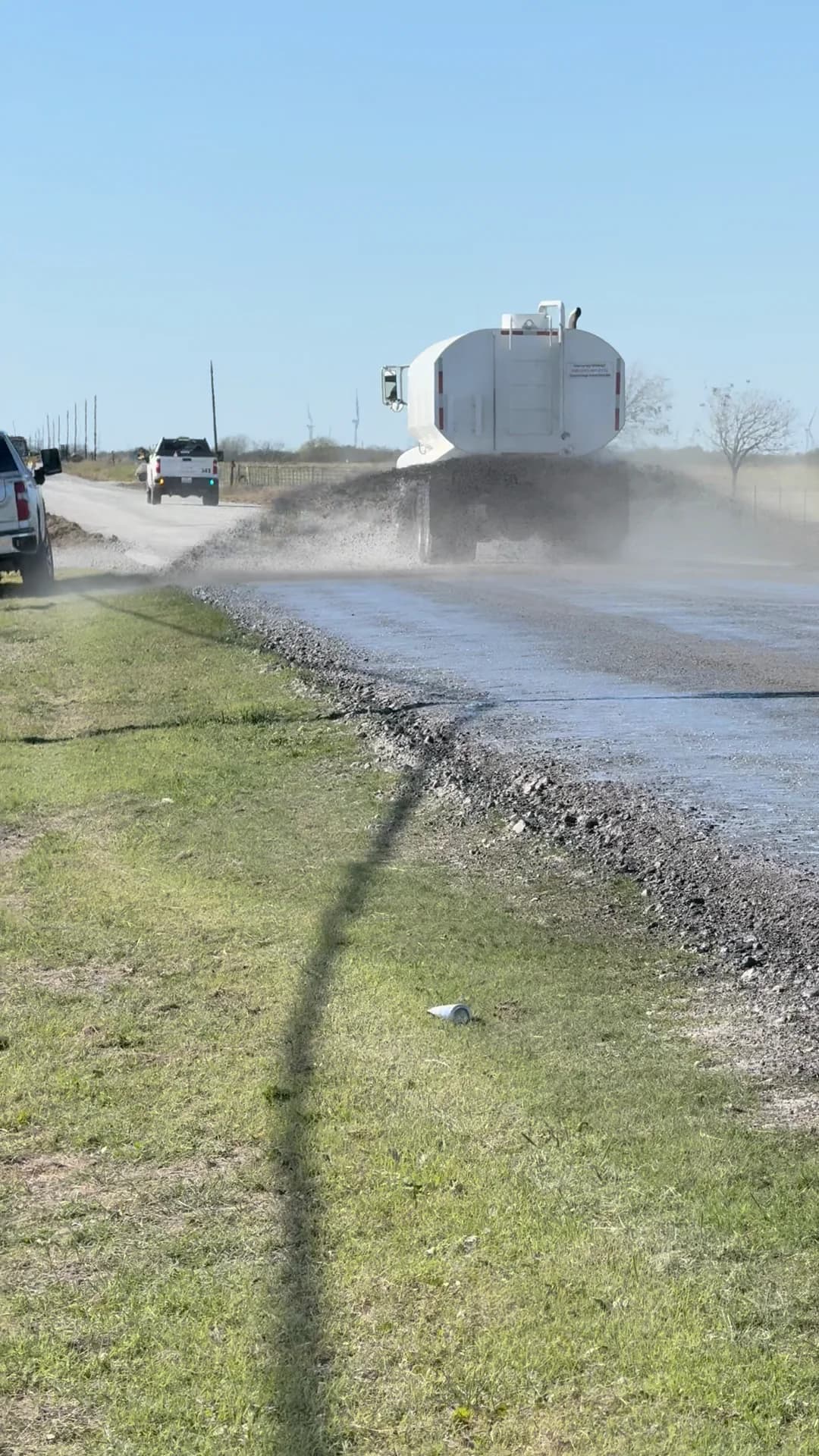
Watch Crownwood apply Permabase Black in the field. A water truck distributes the diluted treatment across the prepared surface.
02 / Find your application
Give suitable dirt and caliche access roads a more cohesive, dark surface. Start with the material you have and the way you use the road.
Soil, drainage, traffic, and turning loads determine the right surface. For high-speed roads or demanding commercial traffic, plan for an engineered pavement section and an appropriate wearing course.
03 / From material to surface
We help define the treatment around your material, equipment, and site. Rates and cure time follow that plan.
Review the soil and traffic. Grade the surface and address drainage before treatment.
Dilute concentrate with water and apply to the prepared material at the specified project rate.
Work and compact the treated material to the agreed application plan and density requirements.
Allow the water to evaporate and the polymer to bind. Confirm readiness before opening to traffic.
Supplied in IBC totes
Send your road length, width, existing material, and delivery location. We’ll help work out the application, quantity, and current pricing.
Plan your order04 / Good questions
Have a specific job in mind? Talk it through with the Crownwood team.
210-792-5236Permabase Black is a polymer-acrylic soil stabilizer with a carbon-black tint. It can serve as a dark wearing surface on suitable low-speed projects. High-speed roads and demanding commercial traffic require a project-specific pavement design.
Suitable caliche and dirt roads, ranch and farm access, private drives, and low-speed yards are potential applications. Crownwood reviews the existing material, drainage, vehicle loads, and turning movements to help establish product fit.
Permabase Black is supplied in 275-gallon concentrate totes. Quantity depends on the surface area, material condition, treatment method, and specified application rate. Send your project dimensions and location for a recommendation and quote.
Plan for inspection and maintenance appropriate to the traffic, weather, and drainage. Wear and sun exposure can affect the surface and its color over time. Crownwood can help assess whether a touch-up or other maintenance is appropriate.
Prepare and grade the surface, dilute the concentrate according to the project application plan, apply it with suitable spray equipment, and compact the treated material. Allow the surface to cure before opening to traffic. Preparation, dilution, and curing requirements depend on the project conditions.
Request the current SDS and product information from Crownwood. Include your intended use and project location so the team can provide the relevant application guidance along with pricing and availability.
Let’s pave differently.
A ranch entrance. A county route. The yard that never stops working. Start with the site, and we’ll help you plan the next step.
Talk to Nate · 210-792-5236Request SDS & product information